Description
W.E.B DuBois
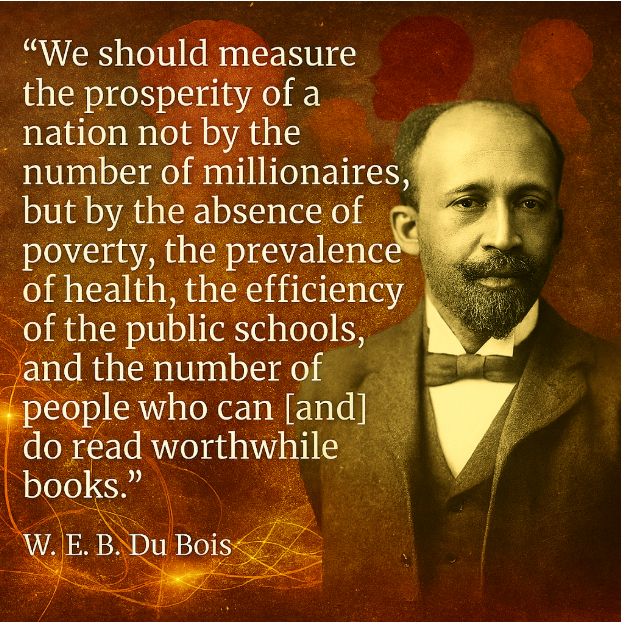
W.E.B. Du Bois was not only a writer—he was an architect of modern Black thought, a builder of movements, and one of the most brilliant minds of the 20th century. Born in 1868 in Great Barrington, Massachusetts, Du Bois became the first Black American to earn a Ph.D. from Harvard University in 1895, grounding his scholarship in rigorous historical and sociological research. His groundbreaking early work, The Philadelphia Negro (1899), was one of the first examples of scientific sociology in the United States, using systematic data collection to reveal the structural roots of racial inequality. [britannica.com] [thoughtco.com]
In 1903, Du Bois published The Souls of Black Folk, a text that reshaped American letters and introduced foundational concepts such as double consciousness—the tension of seeing oneself through the eyes of a society that denies one’s humanity. He co‑founded the NAACP in 1909 and served as editor of The Crisis, using the platform to challenge lynching, segregation, and disenfranchisement. Through fiery essays, relentless organizing, and uncompromising advocacy, Du Bois insisted that Black Americans deserved full civil rights—not in some distant future, but immediately. [thoughtco.com] [britannica.com]
Du Bois’s vision extended far beyond U.S. borders. As a pioneering Pan‑Africanist, he helped organize several Pan‑African Congresses, pushing for the liberation of colonized African nations and inspiring independence movements around the world. Later in life, he embraced global anti‑war and anti‑colonial activism, eventually moving to Ghana, where he spent his final years advancing the Encyclopedia Africana and aligning with the worldwide struggle for human dignity.



Reviews
There are no reviews yet.